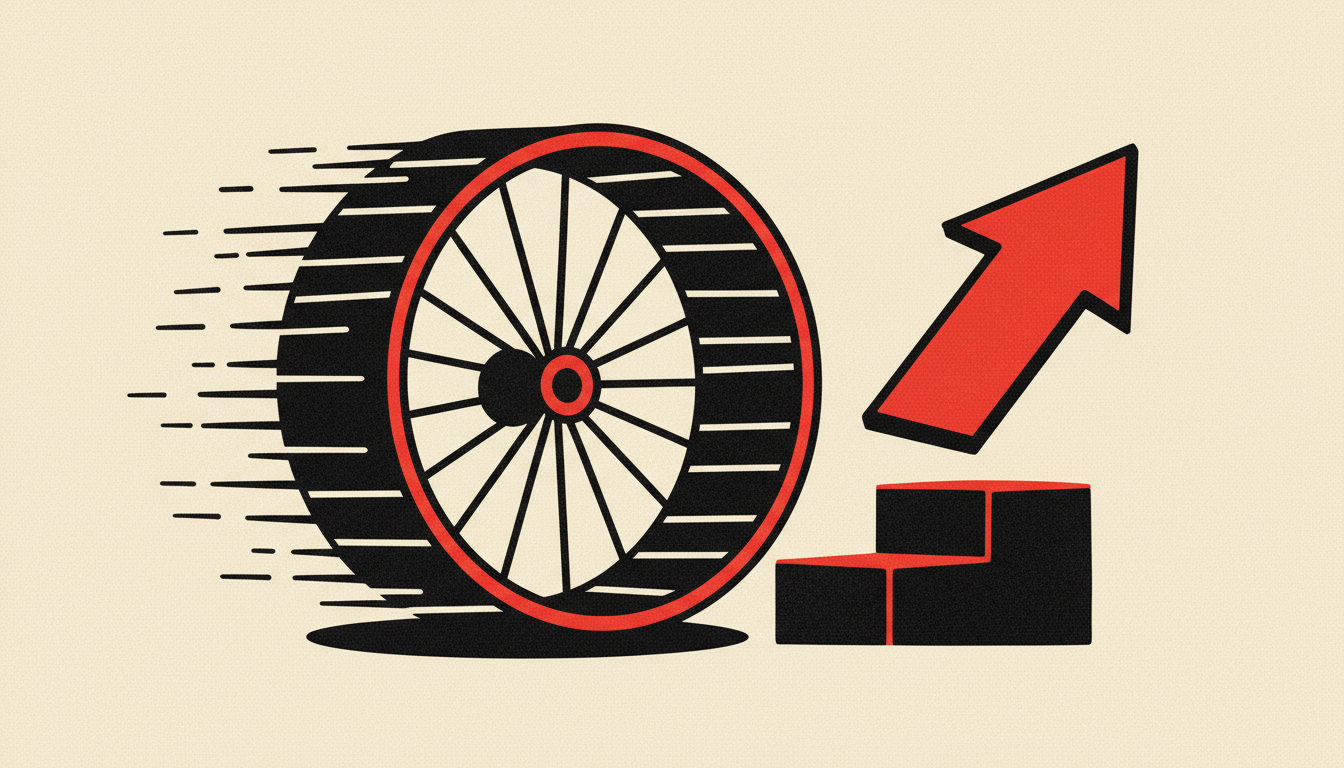
Some days I answer every message, sit through every meeting, tick off a dozen small things, and still close the laptop knowing the important work didn’t move. The calendar was full. Nothing changed.
That gap between activity and progress is where a lot of careers stall. Activity is what filled the hours. Progress is what’s different because of them.
Why busy feels so good
Small tasks finish fast. An email takes three minutes and you get the little hit of done. Important work is slower and less certain, and the payoff can be weeks away.
Busy is also visible. People see you replying quickly and showing up to everything. They don’t see the hour you spent thinking a problem through. Without clear priorities, looking busy starts to stand in for being useful.
Leading yourself comes first
I file this under Lead Loud on purpose. Before you lead anyone else, you lead your own calendar, and the calendar is the most honest record of what you actually think matters.
What helps me is naming, before the day starts, the one outcome that would make it worthwhile. It has to be specific enough that I’d know when it’s done. “Work on the strategy” is too loose. “Draft both options and compare cost, risk and customer impact” gives me something to finish.
Not every day produces a milestone. Some days are maintenance or helping other people, and that’s real work. I just want to know why a task matters and what bigger thing it connects to.
Protect a block of attention
Pick a realistic stretch of time for the work that needs concentration. Close the unrelated tabs, mute what isn’t urgent, and stop checking messages out of habit. If interruptions come with your role, decide when you’ll come back to the task rather than hoping you will.
A quick filter for the to-do list
- Does this move a priority forward or prevent a real problem?
- Does it need me, or can it be handed off, simplified or declined?
- What does done look like, and when does it actually need to happen?
Look back at outcomes
At the end of the week I try to skip the count of meetings and ask different questions. Which decision moved? What got fixed? What did I learn, and what’s still stuck?
Some of the most valuable work won’t show up in that review. Building trust or learning a hard skill takes a long time to pay off. It still deserves a slot in the week, even when it doesn’t fit neatly in a list.
You don’t have to fill every hour to make a day count. Start by choosing the one thing that should move.
Go down the rabbit hole → The decisions nobody sees
Your turn
Look at last week’s calendar. Which hour actually moved something forward?
Leave a Reply