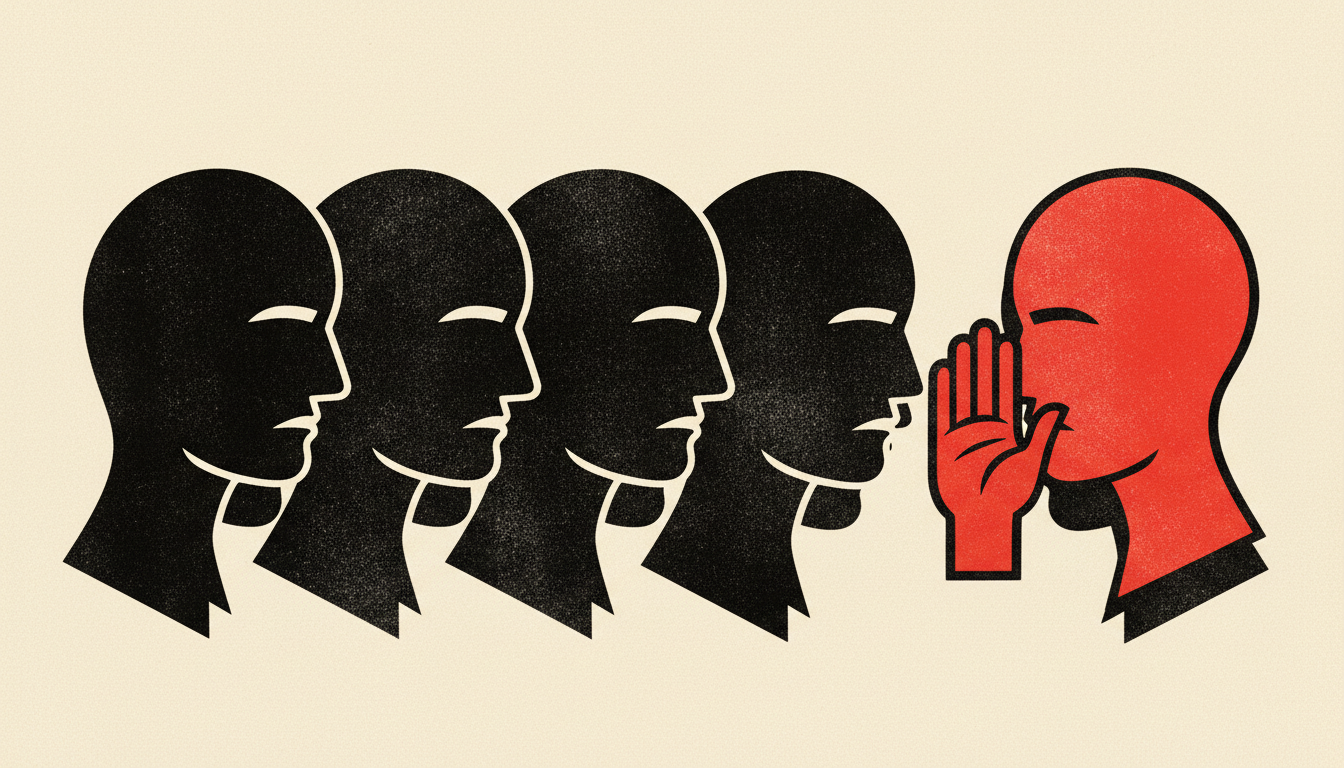
A meeting wraps up early. Everyone nods, the plan moves on, and nobody asks the awkward question. It feels like alignment. Often it’s just silence, and silence covers a lot: people who aren’t convinced, people who spotted a risk and decided it wasn’t worth the trouble, people who are simply tired.
When I talk about leading loud, this is a big part of what I mean. Speaking up yourself is the easy half. The harder half is building a room where other people feel they can do it too.
Agreement is fine. Automatic agreement is the problem
Teams need to land on decisions and get moving. Consensus has its place. Trouble starts when keeping the room comfortable matters more than testing the idea.
You can see it happen. A proposal sails through because a senior person made it. A deadline makes questions feel rude. Confidence gets mistaken for evidence, and a lack of objections gets read as proof that everyone thought about the same risks.
Push on the idea, leave the person alone
“What’s backing up this assumption?” opens a conversation. “You never think these things through” ends one. The first is about the work and the second is about someone’s character, and people hear the difference straight away.
Meetings don’t need to turn into debates. The point is to get the useful objections out while the decision can still change. A good challenge can expose a missing stakeholder, a weak number, or the fact that the team is solving the wrong problem.
People copy what happens to the first person who disagrees
Everyone watches how a leader reacts when someone questions the plan. Irritation teaches the team to keep quiet. Curiosity teaches them that raising a risk is part of the job.
Some things that help: ask for the strongest case against the option you prefer, ask the people closest to the work what they see, and thank the person who found a real weakness. Once a decision is made, the team can commit to it and still stay open to new evidence. Challenging a decision and undermining it are different things, and it’s worth saying so out loud.
Questions I keep handy
- What are we assuming that might not be true?
- What would someone affected by this see that we’re missing?
- Which alternative haven’t we looked at seriously?
- How could this fail, and how would we notice early?
It works both ways
Feeling safe to speak up doesn’t mean every concern wins. A concern should be heard and answered. The person raising it owes the team their reasoning and an open mind. The person receiving it has to resist defending an idea just because it’s theirs.
A team that can disagree well usually ends up trusting each other more, because people know the agreement in the room is real.
Go down the rabbit hole → The decisions nobody sees
Your turn
When did someone last disagree with you in a meeting, and what did you do with it?
Leave a Reply