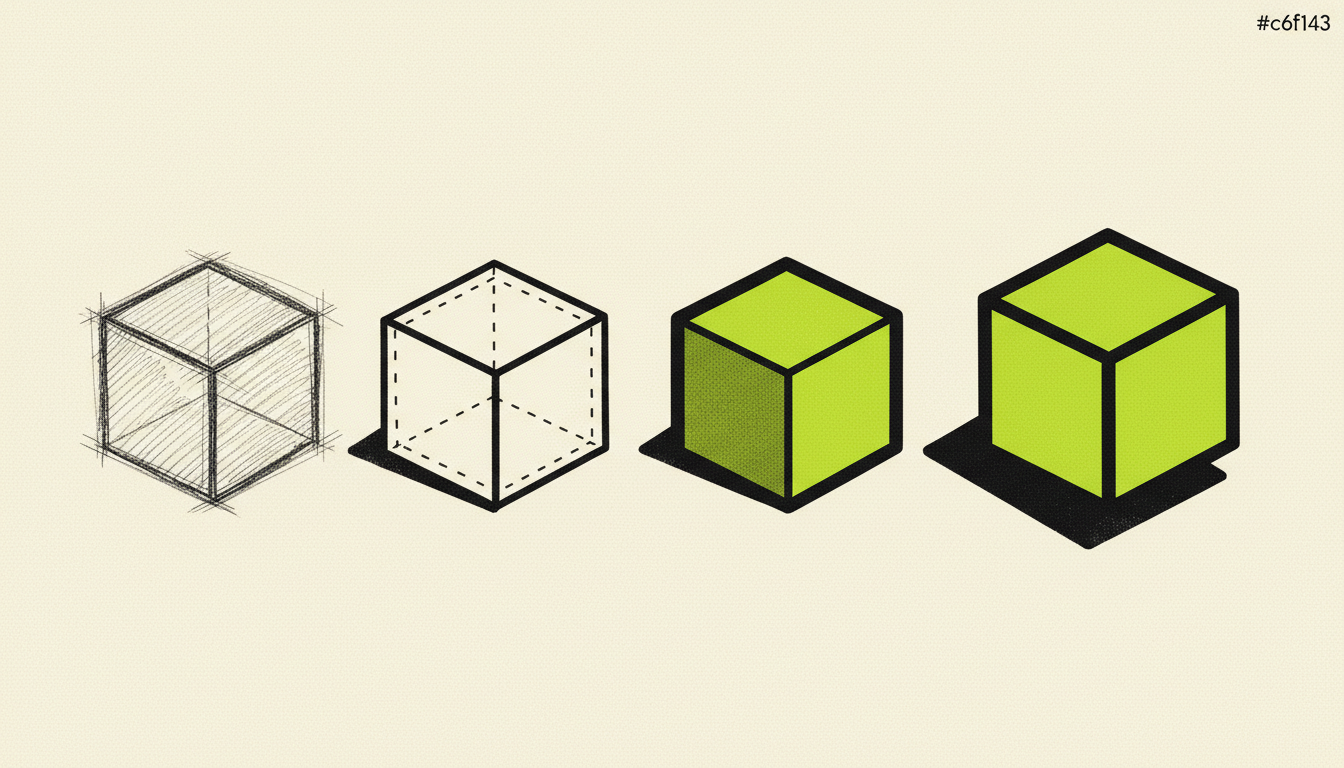
My first post on product development read like a textbook: six tidy stages from brainstorm to launch. The stages still hold up. What I’d change is the tone, because building something is far messier than a numbered list suggests, and most of the useful learning happens between the steps.
Here’s how I’d explain it now, for anyone sitting on an idea, whether it’s a product, a personal project or something you’ve wanted to try for years.
Start with the problem and the people
Before falling for a solution, get specific about who has the problem and how they deal with it today. Look at what already exists and where it falls short. A gap you can describe in one sentence is worth more than a long list of features.
Turn the idea into something people can react to
Sketch it, describe it, mock it up. The goal is a concept concrete enough that others can poke holes in it. If you’re working with designers or engineers, bring them in early so you find out what’s feasible before you’re attached to it.
Prototype and test, then do it again
Build the roughest version that lets someone try the core idea, and watch them use it. Does it work? Is it clear? Where do they get stuck? Each round should change something. If nothing changes after a test, it probably wasn’t asking a real question.
Make it real
For a physical product, that means suppliers and production you can rely on, and keeping a close eye on quality as volume grows. For software or a service, it means building the version people will actually depend on. Either way, the standard you set in testing has to survive the move to the real thing.
Launch to the people you started with
Go back to the people from step one. Explain the problem you solved in their words. Social media and partnerships can help, but early on, a handful of people who really get it are worth more than a burst of attention.
Keep listening
Launch is where the honest feedback starts. Ask what people expected and what they actually experienced, and let that shape the next version.
None of these steps needs a big team or a big budget to begin. The ideas that stay ideas are usually the ones still waiting for a perfect plan. Pick the step you’re on and take the next small action.
Go down the rabbit hole → My SEO playbook for a personal site
Your turn
Which idea have you been sitting on, and what’s the first step that makes it real?
Leave a Reply